Scriptures

How will media cover the secretive Afghan mullah who will shape Islam's global status?

How will media cover the secretive Afghan mullah who will shape Islam's global status?

Showing his age, The Guy notes with amusement that early in his career "Afghanistanism" meant "the practice (as by a journalist) of concentrating on problems in distant parts of the world while ignoring controversial local issues" (per the authoritative Merriam-Webster)!

Today, many will argue that no nation is more important in news terms than the Islamic Emirate of Afghanistan, which affects both international turmoil and Islam's global status and cultural direction.

Journalists may ask, “Why?” This is probably the most heavily Muslim of nations and the Taliban who regained power in August proudly proclaim totalist governance based upon strictly interpreted and enforced Sharia (Islamic religious law). This example of Islam in action presents a huge challenge to the world religion.

A two-page (paywalled) Wall Street Journal status report by chief foreign correspondent Yaroslav Trofimov last weekend said the militantly Sunni Taliban have yet to impose the harshest policies that provoked wide condemnation during the prior Taliban years in power.

But the future is iffy.

For the moment, females seem able to attend primary school, but mostly not high school and college. Rigid bans on women leaving home unless accompanied by male relatives have not reappeared, and some women continue careers though many do not.

Public spectacles of beheading of opponents, and street beatings by religious police, have not resumed (though there are social-media rumors), nor have music and visual art yet been restricted. Shia and Sufi Muslims, and the tiny enclaves of non-Muslims, are understandably anxious, along with Christians, both coverts and missionaries who chose to remain after the exodus. (Other aspects of autocratic rule are commonplace in that part of the world.)
Please respect our Commenting Policy

Wut happened? Tensions behind World's move to push Olasky out of his editor's chair

Wut happened? Tensions behind World's move to push Olasky out of his editor's chair

First things first: Readers need to know that Marvin Olasky has been a friend of mine for yearly three decades. If I was dangling off a cliff, I’d trust Olasky to hold the rope.

Through the years, Marvin and I have disagreed on many journalism issues and had some stimulating debates. For example: He was dead right when, in the first years of Internet life, he predicted that life in the digital world — think social media in particular — would undercut old-school standards of balance and objectivity in journalism. In GetReligion terms, think “Kellerism” and much of today’s New York Times.

Back to the present, and a pretty solid Times piece that is lighting up Twitter. Here’s the double-decker headline:

His Reasons for Opposing Trump Were Biblical. Now a Top Christian Editor Is Out.

A clash over culture and politics comes to World, a groundbreaking journalistic institution that covers evangelical Christians.

There is, of course, no way to leave Donald Trump out of this story, with Olasky submitting his resignation (he was planning to retire next summer) after a coup in the World board after several years of tensions. Among the hot-button issues, readers learn, were COVID-19 masks and voter fraud (#DUH).

As I said, the story is pretty good, with Olasky — rare, this — portrayed in the elite press as a good guy. However, there is one statement that I need to challenge right up front:

At one level, Mr. Olasky’s departure is just another example of the American news media sinking deeper into polarization, as one more conservative news outlet, which had almost miraculously retained its independence, is conquered by Mr. Trump.

Has the newsroom at World been “conquered by Trump”?

I would say that we do not know that, yet. It’s clear that the World board signed off on the creation of an ambitious World-branded commentary website — without Olasky’s approval as editor. But do we know that the news team will not bravely carry on with its work?

We do not know that, do we?


Please respect our Commenting Policy

United Methodist pastor dives into HBO drag-queen culture, drawing joyful RNS applause

United Methodist pastor dives into HBO drag-queen culture, drawing joyful RNS applause

Religion news consumers who have been alive for a few decades are probably aware that — on issues related to the Bible and sexuality — United Methodists are, in fact, not united.

Anyone looking for deep background on that topic can turn to a classic document from the mid-1980s entitled “The Seven Churches of United Methodism.” Click here for the first of two “On Religion” columns I wrote about the continuing relevance of that report, which was written by Duke University sociologist Robert L. Wilson, who died in 1991, and William Willimon, now a retired bishop.

Of course, there are bipartisan plans for a United Methodist divorce that would create a more LGBTQ-friendly version of the current denomination and a global Methodist body that would retain traditional teachings on marriage and sexuality. Hold that thought.

Every now and then, Religion News Service — one of the definitive sources for news on the Christian left — produces a news report that perfectly illustrates just how divided Methodists are on edgy issues related to sexuality. This brings us to the following dramatic double-decker RNS headline:

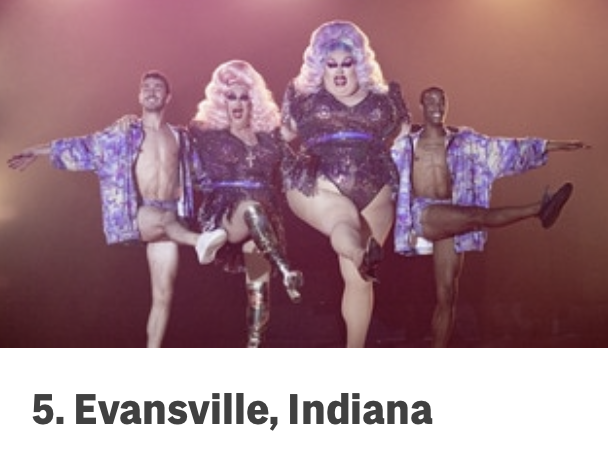
Meet the United Methodist pastor featured on HBO’s drag reality show ‘We’re Here’

Performing in drag was an ‘incredibly wonderful, refreshing, deepening, powerful spiritual experience,’ said Pastor Craig Duke of Newburgh United Methodist Church in Indiana.

Let me note, right up front, that this story opens all kinds of doors to discussions of the two doctrinal approaches that — on issues of biblical authority and a host of other issues — can be found in the current United Methodist Church. However, the story includes absolute zero voices from Methodists on the traditional side of these debates — even from members of the pastor’s own congregation who can be expected to ask questions about his TV leap into the world of drag culture.

Here is the overture to this advocacy-journalism report. This is long, but essential:


Please respect our Commenting Policy

Journalism tips on: (1) Evangelical crack-ups, (2) campus faith fights, (3) COVID exemptions

Journalism tips on: (1) Evangelical crack-ups, (2) campus faith fights, (3) COVID exemptions

A potential U.S. evangelical crack-up continues as a lively story topic since Guy Memos here since these two Memos here at GetReligion, “Are we finally witnessing the long-anticipated (by journalists) evangelical crack-up?” and also “Concerning evangelical elites, Donald Trump and the press: The great crack-up continues.” In USA Today, Daniel Darling, for one, sought hope despite his recent victimhood in these tensions.

Media professionals considering work on this theme should note a lament at book length coming next week: "Struggling with Evangelicalism: Why I Want to Leave and What It Takes to Stay" by Dan Stringer. The author is a lifelong evangelical, Wheaton College (Illinois) and Fuller Theological Seminary alum, leader of InterVarsity's graduate student and faculty ministries in Hawaii and Evangelical Covenant Church minister. This book comes from InterVarsity Press.

The Guy has yet to read this book, but it looks to be a must-read for reporters covering American evangelicals in the Bible-Belt and elsewhere. Stringer ponders how evangelicalism can move beyond too-familiar sexual scandals, racial and gender conflicts, and Trump Era political rancor -- what a blurb by retired Fuller President Richard Mouw calls "blind spots, toxic brokenness and complicity with injustice."

Regarding the Donald Trump factor, the evangelical elite was largely silent, with one faction openly opposed, while certain outspoken evangelicals backed the problematic populist.

As The Guy has observed, recent politics exposed the already existing gap between institutional officials and the Trumpified evangelical rank and file. Problem is, to thrive any religious or cultural movement needs intelligent leaders united with a substantial grass-roots constituency to build long-term strategy.

Evangelicalism has always combined basic unity in belief with a wide variety of differences. Think denominational vs. independent, Arminian vs. Calvinist, gender "complementarian" vs. "egalitarian," Pentecostal-Charismatic vs. others and a racial divide so wide that many Black evangelicals shun the e-word alltogether.

In an October 21 Patheos article, historian Daniel K. Williams at the University of West Georgia added North vs. South to those internal divisions. He recounts that the Southern Baptist Convention remained mostly apart when northerners began to supplant "fundamentalism" with "evangelicalism" in the World War II era. Eventually, he says, this movement formed a North-South alliance but it's now eroding.


Please respect our Commenting Policy

Religious liberty at SCOTUS, again: Touch, comfort and the prayers of clergy at executions

Religious liberty at SCOTUS, again: Touch, comfort and the prayers of clergy at executions

The U.S. Supreme Court will hear religious freedom arguments Tuesday in the case of a Texas death-row inmate named John Henry Ramirez.

Ramirez, 37, wants his Southern Baptist pastor to lay hands on him and pray before and during his execution. The state of Texas won’t allow it.

Time magazine’s Madeleine Carlisle provides a nice overview of the case.

“The job of a minister is not to stand still and be quiet,” Dana Moore, the inmate’s pastor, tells Time. “Prayer is very important. And the power of touch is real. It’s encouraging. It brings peace. It’s significant… Why can’t I hold his hand?”

In an August interview with New York Times religion writer Ruth Graham, Ramirez took responsibility for killing Corpus Christi convenience store clerk Pablo Castro, calling Castro’s 2004 death a “heinous murder.” (As noted by the Corpus Christi Caller-Times, Ramirez “beat and kicked Castro and stabbed him 29 times with a 6-inch serrated knife.” He and two female accomplices left the scene with $1.25.)

“It would just be comforting,” Ramirez said of wanting Moore by his side at the time of his lethal injection.

At The Associated Press, religion writer David Crary explains that the “ACLU has a long history of opposing the death penalty and also says that condemned prisoners, even at the moment of execution, have religious rights.”

Conservative church-state activists have been involved in this case, and others like it, since Day 1.

“Intriguingly, the ACLU’s position in the Ramirez case is echoed by some conservative religious groups which support the death penalty and are often at odds with the ACLU on other issues,” Crary reports.


Please respect our Commenting Policy

How do modern Latter-day Saints view their faith's complex history of polygamy?

How do modern Latter-day Saints view their faith's complex history of polygamy?

THE QUESTION:

How do Latter-day Saints view the polygamy in their faith's past?

THE RELIGION GUY'S ANSWER:

The Church of Jesus Christ of Latter-day Saints (which seeks to abolish its former "Mormon" nickname) was founded in 1830 by the Prophet Joseph Smith, Jr., who later began practicing and advocating polygamy (the faith prefers the term "plural marriage" and in past times spoke of "the Principle.") Smith wanted this kept secret but dissenters inside his flock revealed the controversial teaching, which played a role in his 1844 assassination.

After Smith's successor as prophet, Brigham Young, led LDS adherents to Utah, the church in 1852 openly proclaimed its practice. This scandalized the nation. Young himself was to take 55 wives. But when federal laws attacked the faith's very organizational existence, President Wilford Woodruff halted the practice in the 1890 "Manifesto." Today, polygamy is grounds for excommunication, even in nations where it is legal.

That is basic, well-established history. But there's far more to be said.

In recent times, the Utah-based faith has issued relatively candid explanations (click here), as well as on the subject of "plural marriage” (click here). Now the church's Deseret Book company has published "Let's Talk About Polygamy," a more thorough and fascinating accounting by Brittany Chapman Nash, a 10-year veteran of the church's official history department who emphasizes the experience of LDS women. Much of the following relies upon her research.

Twenty-first Century Americans might wonder why LDS followers ever wanted multiple spouses. At one level, the answer is quite simple. As Nash says, "they believed God commanded it." Members then and now believe in Smith as God's unique prophet and that all his revelations established the "latter-day" restoration of true Christianity that had been lost for nearly 19 centuries.

Smith's own marital history began with his 1827 wedding to the former Emma Hale. His early scriptural revelations in the Book of Mormon and Doctrine and Covenants advocated traditional Christian monogamy. But in the mid-1830s Smith privately wed 16-year-old Fanny Alger, who worked in the Smiths' home. She soon moved away and married another man. History does not record what Emma knew or thought about this.


Please respect our Commenting Policy

ProPublica covers horrors at Liberty University. But do all Christian colleges hide rape cases?

ProPublica covers horrors at Liberty University. But do all Christian colleges hide rape cases?

Yes, Liberty University is back in the news — for valid reasons. Yes, the news involves accusations of sexual violence.

Let’s start with the basics. It’s never good for a Baptist institution when the official news service of the Southern Baptist Convention publishes a story like this one: “Ex-Liberty spokesman says he was fired for raising concerns.”

The only thing missing from that somewhat soft headline is, well, the sex angle. However, that promptly shows up in the lede. Once again, we are talking about the overture in a story from a conservative, Baptist press office:

A former spokesperson for Liberty University is suing the evangelical school after being fired, alleging in a lawsuit filed Monday (Oct. 25) that his termination came in retaliation for voicing concerns that sexual misconduct accusations were mishandled.

Scott Lamb, a vice president-level executive at the school where he was hired in 2018, said in an interview with The Associated Press that he pushed for answers about what was being done to investigate claims raised in a lawsuit filed over the summer by 12 women, and was continually dissatisfied.

The women’s lawsuit, which is still ongoing, alleged the school had a pattern of mishandling cases of sexual assault and harassment and had fostered an unsafe campus environment. A student-led movement has since been established to advocate for systemic reforms, and the nonprofit investigative journalism outlet ProPublica published a deeply reported investigation … with findings similar to the allegations raised in the lawsuit.

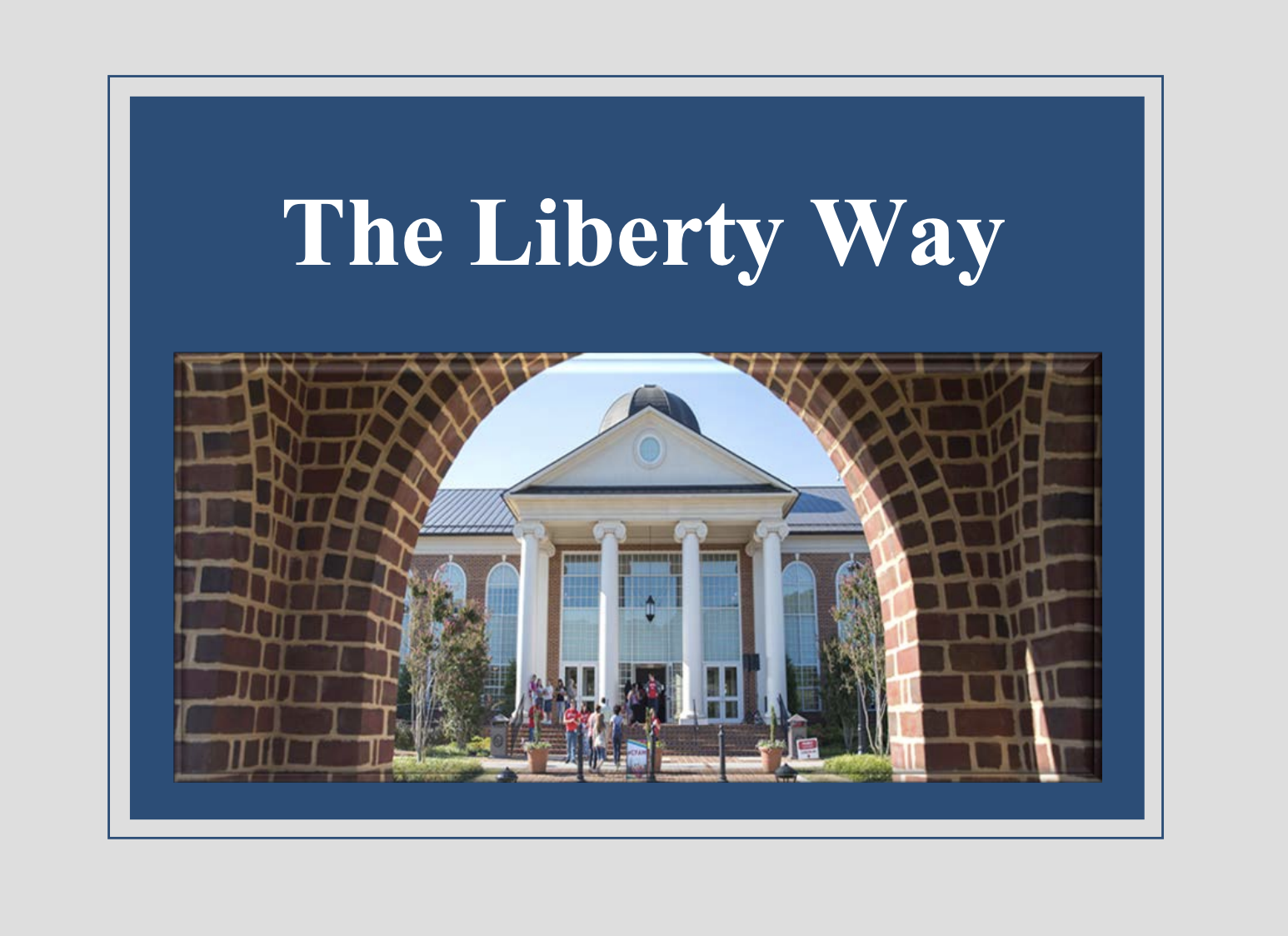
Now, the key to all of this is the brutal contents of that ProPublica piece: “ ‘The Liberty Way’: How Liberty University Discourages and Dismisses Students’ Reports of Sexual Assaults.” If you want a quick summary of the accusations — in another rather conservative source — check out this report at The New York Post: “Liberty University accused of making it ‘impossible’ to report rape, lawsuit alleges.”

The ProPublica report is, of course, hostile to Liberty University in every way possible. It’s also clear that Liberty officials appear to have gone out of their way to earn that hostility — in large part by refusing, at ever twist in the plot, to speak on the record about the university’s perspective on these issues.


Please respect our Commenting Policy

Faith and politics: It's hard to tell true believers from those who are simply 'self-identified'

Faith and politics: It's hard to tell true believers from those who are simply 'self-identified'

When political scientists and pollsters discuss faith and politics, one of their biggest challenges is separating the true believers from those who merely say they are believers.

It's kind of like distinguishing between "football fans" and "FOOTBALL FANS," said John C. Green of the University of Akron, who for decades has been a trailblazer in studies of politics, pulpits and pews.

"Lots of people say they're football fans and they like to watch games on television," said Green. "Then there are the people who buy jerseys and get decked out in their team colors. They never miss a home game and everything that goes with that. You can just look at them and know that they're really FOOTBALL FANS."

In terms of faith and politics, oceans of ink have been spilled describing the beliefs and goals of evangelical Protestants, Catholics and members of other religious groups, he said. The problem is that there are "self-identified" evangelicals and then there are truly faithful evangelical Christians. There are plenty of people who tell pollsters they attend worship services every week and that their faith shapes their lives. Then there are those who truly walk that talk.

"All religious communities have lots of highly committed people, and all religious communities have their share of marginal members whose faith isn't all that active," said Green. For pollsters, the challenge is asking questions that help draw lines between "self-identified believers and those who are truly active" in their faith groups, he added.

The American Bible Society, in its "State of the Bible" surveys, has tried to document ways in which beliefs about the Bible, and personal interactions with scripture, separate "practicing Christians" from "self-identified Christians." This matters, in part, because religious groups containing a high percentage of committed believers usually maintain their members, or even make converts, while other groups struggle to survive.

The most recent ABS survey (.pdf here) was completed last January, with data collected from 3,354 online interviews with adults in all 50 states and the District of Columbia. The American Bible Society began studying these kinds of issues as early as 1812.

In this survey, a "practicing Christians" was defined as someone who "identifies as a Christian, attends a religious service at least once a month" and states that "faith is very important" in his or her life.


Please respect our Commenting Policy

People have been asking: Is the COVID vaccine the Bible's sinister 'mark of the beast'?

People have been asking: Is the COVID vaccine the Bible's sinister 'mark of the beast'?

THE QUESTION:

Is the COVID vaccine the biblical "mark of the beast"?

THE RELIGION GUY'S ANSWER:

Many odd anti-vaccination rumors with murky origins are floating around social media, alarming healthcare workers as they combat a virus that has killed 720,000 Americans and counting.

Take the "mark of the beast" claim. The Guy can confidently answer "no" to this question, based upon the strong consensus among Bible experts, both those who take the Bible portion at issue -- Revelation chapter 13 -- literally and those who follow symbolic interpretations.

The beast, identified with the famously sinister number "666" and the "mark," is found in the final book of the Bible, whose images have always been subject to a wide variety of fanciful interpretations. Over the centuries, some have identified the beast as the pope, Napoleon, Stalin, Hitler and many other leaders.

Let's clear the ground just a bit.

There are five basic ways to understand the last 18 chapters of this "revelation of Jesus Christ" to "his servant John."

* A "preterist" says the imagery depicts past events that faced early Christians living under the Roman Empire.

* The "historical" school sees church scenarios across the centuries.

* A "futurist" insists these are literal events that still lie ahead of us.

* The "spiritual" school advocates a symbolic presentation of realities with no specific historical application, past, present, or future.


Please respect our Commenting Policy